GDPR Legitimate Interest Assessment: A Complete Guide
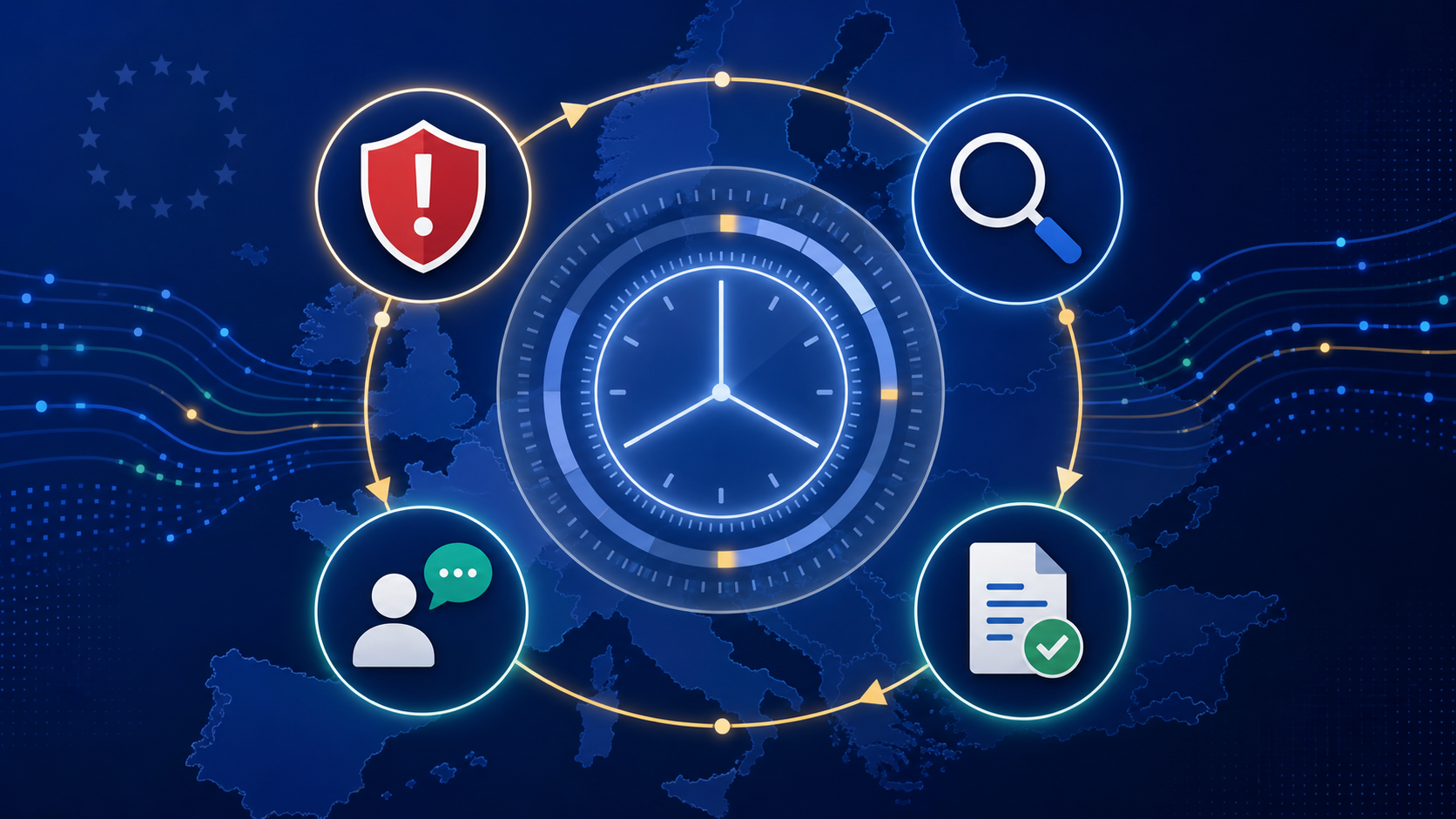
A GDPR legitimate interest assessment is one of the most misunderstood — and most misused — tools in the data protection toolkit. When applied correctly, it gives organizations a lawful, flexible basis for processing personal data without consent; when applied carelessly, it exposes them to regulatory fines, enforcement action, and reputational damage. This guide breaks down exactly how to conduct a legitimate interest assessment (LIA) that will withstand scrutiny from data protection authorities across the EU and UK.
What Is a GDPR Legitimate Interest Assessment?
Under Article 6(1)(f) of the GDPR, processing personal data is lawful when it is necessary for the purposes of the legitimate interests pursued by the controller or a third party — except where those interests are overridden by the interests or fundamental rights and freedoms of the data subject. A legitimate interest assessment is the structured, documented process you use to determine whether this legal basis actually applies to a specific processing activity.
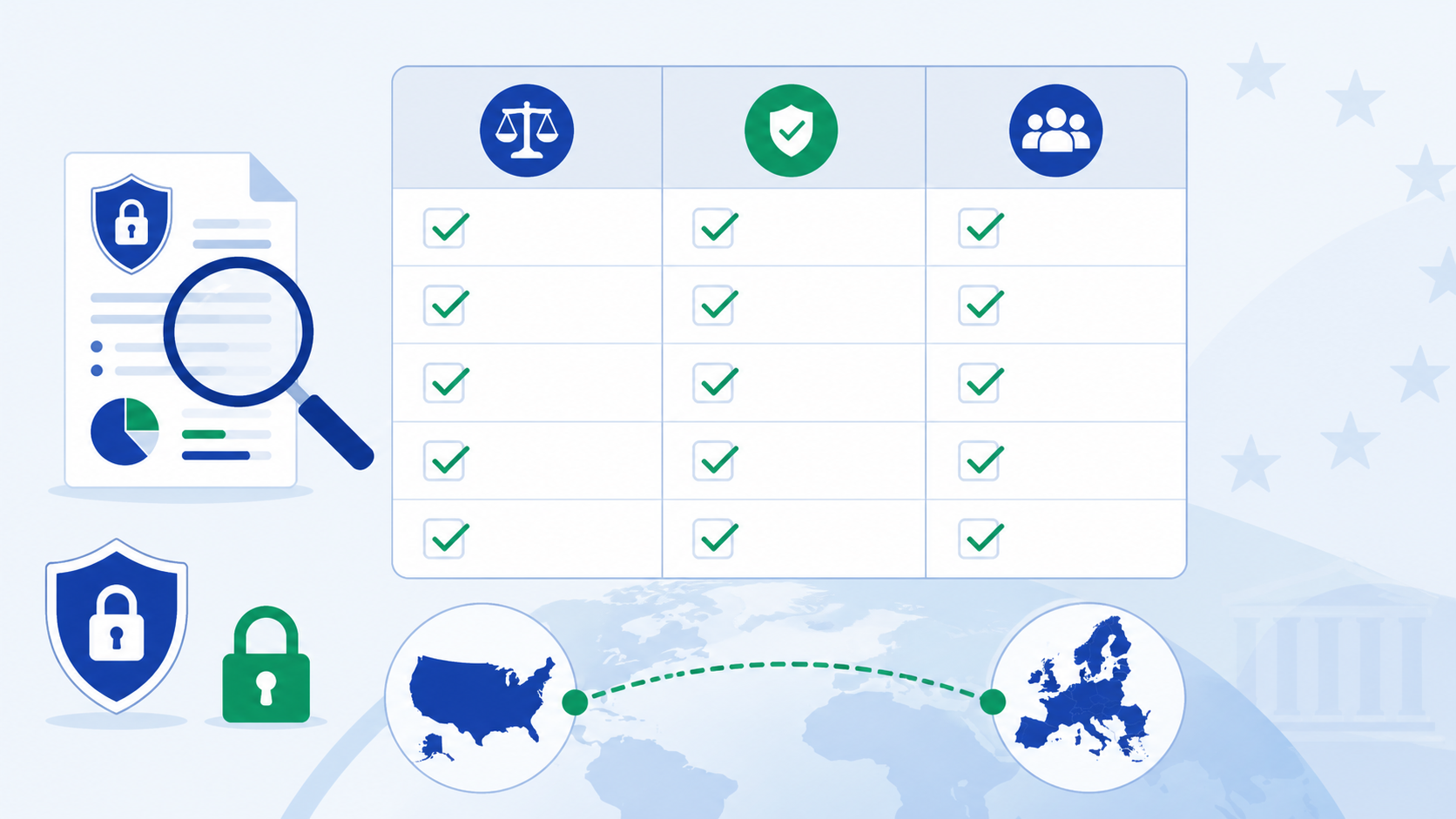
The LIA is not a box-ticking exercise. It is a genuine balancing test that requires you to think carefully about three distinct questions: whether your interest is legitimate, whether the processing is necessary to achieve it, and whether the data subject's rights tip the scales against you. Regulators expect to see this reasoning documented and available on request.
The Three-Part Legitimate Interest Assessment Test
Every GDPR legitimate interest assessment must work through three sequential steps. Failing any one of them means Article 6(1)(f) cannot be your lawful basis for that processing activity.
Step 1: The Purpose Test — Is Your Interest Legitimate?
Your interest must be real, present, and not prohibited by law. The GDPR does not define "legitimate interest" exhaustively, but Recital 47 provides useful examples: fraud prevention, direct marketing to existing customers, intra-group data transfers for administrative purposes, and network security. The European Data Protection Board (EDPB) has clarified that interests can be commercial, social, or even the interests of third parties — but they must be clearly articulated, not vague or speculative.
Ask yourself:
- Can you describe the interest in specific, concrete terms?
- Is the interest lawful under applicable national and EU law?
- Would a reasonable person recognize this as a legitimate objective?
- Is the interest current — not hypothetical or future-facing?
If you cannot answer yes to all four, stop here. You need a different lawful basis.
Step 2: The Necessity Test — Is Processing Actually Necessary?
Necessity under GDPR is not the same as "useful" or "convenient." Processing must be the minimum required to achieve the stated purpose, and there must be no less privacy-intrusive alternative that would achieve the same result. This is where many organizations stumble — they identify a legitimate interest but then process far more data than the purpose requires.
Practical questions to work through:
- What specific data elements are required to achieve the purpose?
- Could you achieve the same outcome with anonymized or pseudonymized data?
- Could you achieve the same outcome by processing data about fewer individuals?
- Is the retention period proportionate to the purpose?
Document your reasoning. If a regulator asks why you process date of birth rather than age range, you need a substantive answer, not a shrug.
Step 3: The Balancing Test — Do Your Interests Override the Data Subject's Rights?
This is the most nuanced part of the GDPR legitimate interest assessment and the one most likely to determine whether your lawful basis holds up. You must weigh your legitimate interest against the privacy interests, reasonable expectations, and fundamental rights of the individuals whose data you are processing.
Factors that weigh in favor of the controller:
- The data subject has an existing relationship with you and would reasonably expect this processing
- The data is not sensitive (not special category data under Article 9)
- The processing has minimal impact on the individual's daily life
- Appropriate safeguards are in place (encryption, access controls, retention limits)
Factors that weigh against the controller:
- The data subject is a child or other vulnerable individual
- The processing involves special category data or criminal records
- The individual would not reasonably expect this use of their data
- The processing could cause financial, reputational, or physical harm
- Large volumes of data or large numbers of individuals are involved
If the balance tips against you, you cannot rely on legitimate interest. You must either redesign the processing activity, implement stronger safeguards to shift the balance, or identify a different lawful basis entirely.
When Legitimate Interest Cannot Be Used
Article 6(1)(f) explicitly excludes processing carried out by public authorities in the performance of their tasks. Beyond that statutory carve-out, there are practical situations where legitimate interest is simply not appropriate:
- Processing special category data: Article 9 requires a separate condition from Article 9(2) in addition to a lawful basis under Article 6. Legitimate interest alone is insufficient.
- Processing children's data for profiling or behavioral advertising: The EDPB and national DPAs have consistently found that children's reasonable expectations and vulnerability tip the balance against controllers in these contexts.
- Selling personal data to third parties: The data subject's interest in controlling their own data almost always overrides a commercial interest in monetizing it without consent.
- Processing that contradicts your privacy notice: If individuals were told their data would be used for purpose A, using it for purpose B under legitimate interest — without a compatibility assessment — is likely unlawful.
Documenting Your Legitimate Interest Assessment
Article 5(2) of the GDPR enshrines the accountability principle: you must be able to demonstrate compliance, not just claim it. This means your LIA must be written down, version-controlled, and linked to your Record of Processing Activities (RoPA). There is no prescribed format, but a robust LIA document typically includes:
| Section | What to Include |
|---|---|
| Processing Activity Description | What data, whose data, what you do with it, how long you keep it |
| Purpose Test Outcome | Statement of the legitimate interest, evidence it is real and lawful |
| Necessity Test Outcome | Justification for data minimization decisions, alternatives considered and rejected |
| Balancing Test Outcome | Analysis of data subject impact, safeguards applied, conclusion |
| Safeguards and Mitigations | Technical and organizational measures that reduce privacy risk |
| Review Date | When the LIA will be revisited (at minimum annually, or when processing changes) |
Your privacy notice must also reflect your reliance on legitimate interest for each processing activity, and data subjects must be informed of their right to object under Article 21. This right to object is absolute for direct marketing and must be honored without question.
Common Mistakes That Invalidate a Legitimate Interest Assessment
Enforcement decisions from the ICO, CNIL, and other DPAs reveal recurring patterns of failure. Avoid these pitfalls:
Treating Legitimate Interest as a Consent Workaround
If you asked for consent and the individual refused, you cannot then rely on legitimate interest to process the same data for the same purpose. The EDPB has been explicit that legitimate interest cannot be used to circumvent a data subject's decision not to consent. This is a fundamental misunderstanding that has resulted in significant fines.
Conducting the LIA After the Fact
The assessment must be completed before processing begins, not after a complaint is received. Retrospective LIAs carry little weight with regulators and suggest the organization was not genuinely applying the accountability principle.
Using Boilerplate Language
Generic statements like "we have a legitimate interest in improving our services" without specific, evidenced reasoning will not satisfy a regulator. Each processing activity requires its own tailored assessment.
Failing to Reassess When Processing Changes
An LIA is not a one-time document. If you expand the scope of processing, add new data elements, change your retention periods, or start sharing data with new third parties, you must revisit and update the assessment.
Legitimate Interest in Practice: Real-World Examples
Example 1: Fraud Prevention
A fintech company processes transaction data to detect anomalous patterns indicative of fraud. The legitimate interest (preventing financial crime) is clear and recognized in Recital 47. The processing is necessary — real-time transaction analysis cannot be achieved with anonymized data. The balancing test favors the controller: customers expect fraud monitoring, the processing protects them as much as the business, and robust security controls are in place. This is a strong LIA.
Example 2: Employee Monitoring
An employer wants to monitor all employee emails to measure productivity. The legitimate interest (operational efficiency) is plausible but weak. The necessity test is difficult to pass — less intrusive alternatives exist (output-based performance metrics). The balancing test is likely to fail: employees have a reasonable expectation of privacy in their communications, and blanket monitoring is disproportionate. This LIA would likely not hold up.
Example 3: B2B Direct Marketing
A SaaS company sends marketing emails to business contacts at companies that match their ideal customer profile. Recital 47 explicitly acknowledges direct marketing as a potential legitimate interest. If the contacts are business email addresses, the data is not sensitive, and an easy opt-out is provided, the balancing test may favor the controller. However, the company must still honor opt-outs immediately and cannot rely on legitimate interest for marketing to consumers in the same way.
How ComplyGuard Streamlines Your Legitimate Interest Assessments
Conducting and maintaining LIAs across dozens of processing activities is operationally demanding — especially for SMBs without dedicated legal or compliance teams. ComplyGuard's AI-powered compliance platform includes structured LIA templates that guide you through all three steps of the balancing test, automatically link completed assessments to your RoPA, and flag assessments that are due for review. Rather than managing spreadsheets and Word documents across shared drives, your entire compliance evidence base lives in one auditable, version-controlled system.
If you are evaluating compliance tools, our platform comparison page shows how ComplyGuard stacks up against manual processes and traditional consultancy-led approaches — including the time and cost savings that matter most to growing businesses.
The ICO's legitimate interests guidance is an excellent companion resource and aligns closely with the structured approach ComplyGuard automates within the platform.
Conclusion
A properly conducted GDPR legitimate interest assessment is not a bureaucratic hurdle — it is a genuine analytical process that protects both your organization and the individuals whose data you process. By working methodically through the purpose, necessity, and balancing tests, documenting your reasoning, and keeping assessments current, you build a defensible compliance position that can withstand regulatory scrutiny. The organizations that treat LIAs seriously are the ones that avoid enforcement action and build lasting trust with their customers and partners.
Ready to stop managing compliance in spreadsheets and start building a defensible, audit-ready GDPR program? Talk to the ComplyGuard team today or explore our pricing plans to see how we help SMBs complete their LIAs, RoPA, and full GDPR compliance framework in a fraction of the time — without expensive consultants.