SOC 2 Incident Response Plan: Requirements & Templates
A well-documented SOC 2 incident response plan is not just a checkbox on your auditor's list — it's the operational backbone that determines whether a security event becomes a manageable disruption or a catastrophic breach. For SMBs pursuing SOC 2 Type I or Type II certification, the Availability, Confidentiality, and Security trust service criteria all intersect directly with how your organization detects, responds to, and recovers from incidents. This guide breaks down exactly what auditors expect, what your plan must contain, and how to build one that actually works under pressure.
Why SOC 2 Requires a Formal Incident Response Plan
SOC 2 is governed by the AICPA's Trust Services Criteria (TSC), and while the framework doesn't prescribe a rigid incident response template, it does require that organizations demonstrate systematic, repeatable processes for handling security events. Specifically, the Common Criteria related to logical and physical access controls (CC6), change management (CC8), and risk mitigation (CC9) all have direct implications for incident response.
Auditors evaluating your SOC 2 Type II report will look for evidence that your incident response plan was not only written but actively used during the audit period. That means documented incidents, response timelines, post-mortems, and evidence of continuous improvement. A plan that lives in a shared drive and was never tested will not satisfy a rigorous auditor.
The key trust service criteria most directly tied to incident response include:
- CC2.2 – Internal communication of information to support the functioning of internal controls
- CC4.1 – Evaluation and communication of deficiencies in a timely manner
- CC7.3 – Evaluation of security events to determine whether they constitute security incidents
- CC7.4 – Response to identified security incidents
- CC7.5 – Identification of the causes of security incidents and remediation
CC7.3 through CC7.5 form the core of what auditors scrutinize most heavily. If your organization cannot demonstrate a structured lifecycle for incidents — from detection through root cause analysis — you will face findings that delay or jeopardize your certification.
Core Components of a SOC 2 Incident Response Plan
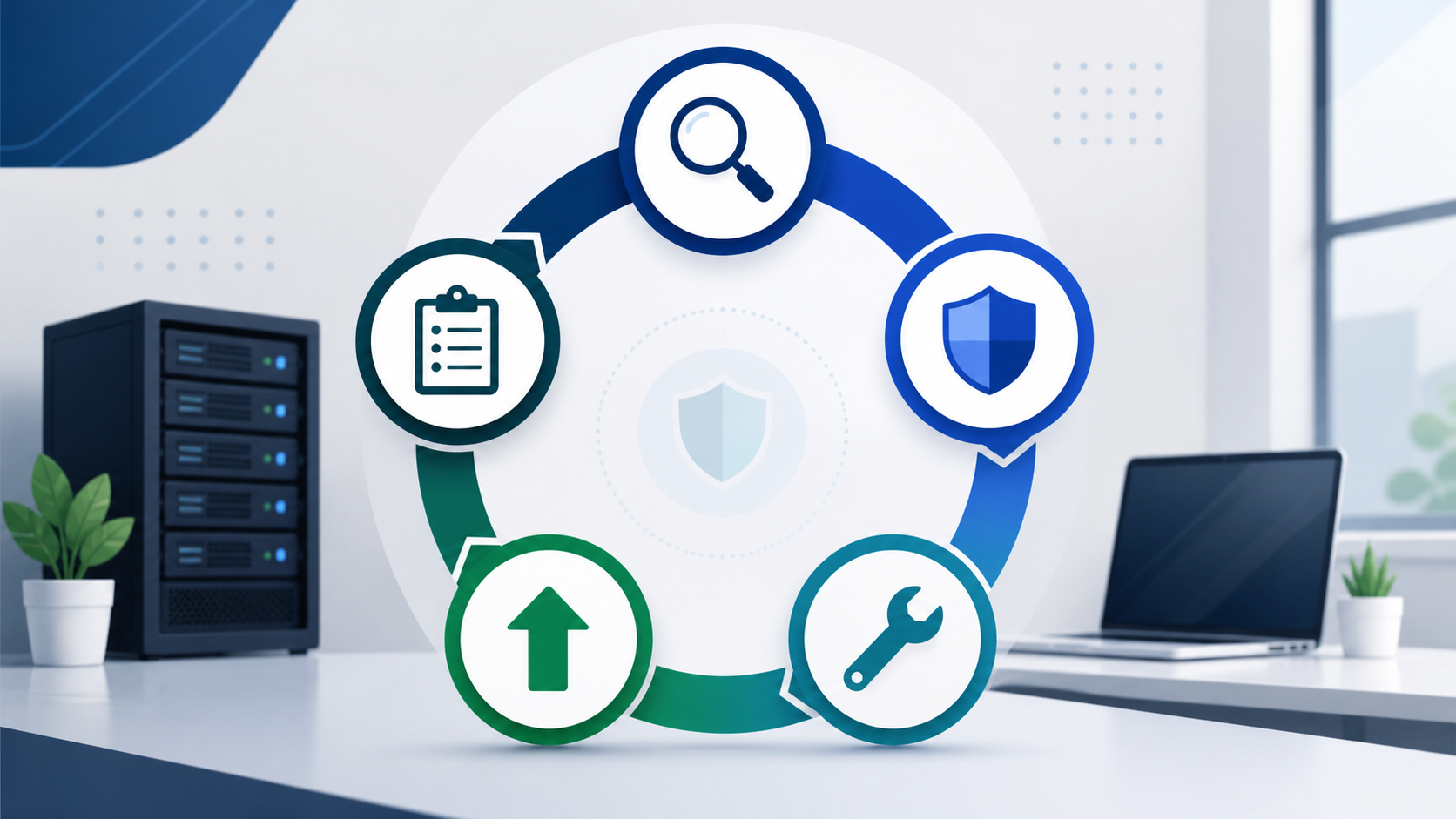
A compliant and effective SOC 2 incident response plan must address six foundational phases. These align closely with the NIST SP 800-61r2 Computer Security Incident Handling Guide, which is widely accepted as the industry standard for incident response methodology.
1. Preparation
Preparation is everything that happens before an incident occurs. This includes defining what constitutes a security incident for your organization, assembling your incident response team (IRT), establishing communication channels, and ensuring your monitoring and logging infrastructure is in place. Your preparation documentation should include:
- An incident classification matrix (severity levels 1–4 or P1–P4)
- Roles and responsibilities for the IRT, including an Incident Commander
- Contact lists for internal stakeholders, legal counsel, and external vendors
- Pre-approved communication templates for customers and regulators
- Access to forensic tools and log aggregation systems
2. Detection and Analysis
This phase covers how your organization identifies potential incidents and determines their scope and severity. SOC 2 auditors want to see that you have automated alerting in place (SIEM, IDS/IPS, endpoint detection) and a defined triage process. Key documentation requirements include:
- Alert thresholds and escalation triggers
- An incident intake form or ticketing workflow
- Criteria for escalating from "event" to "incident" status
- Initial impact assessment procedures
3. Containment
Once an incident is confirmed, your team must act quickly to limit damage. Your plan should distinguish between short-term containment (isolating affected systems) and long-term containment (applying patches, rotating credentials). Document the decision authority for containment actions — for example, who can authorize taking a production server offline.
4. Eradication
Eradication involves removing the root cause of the incident — whether that's malware, a misconfigured access control, or a compromised credential. This phase must be documented with evidence, including system logs, change tickets, and confirmation testing. Auditors will look for proof that eradication was verified, not just assumed.
5. Recovery
Recovery covers restoring affected systems to normal operation and validating that the threat has been fully eliminated. Your plan should define recovery time objectives (RTOs) and recovery point objectives (RPOs) for critical systems, and document the validation steps taken before systems are returned to production.
6. Post-Incident Review (Lessons Learned)
This is the phase most organizations skip — and the one auditors care about most for SOC 2 Type II. A post-incident review (PIR) or "lessons learned" meeting should occur within 5–10 business days of incident closure. The output should be a written report that includes root cause analysis, a timeline of events, what worked, what didn't, and specific remediation actions with owners and due dates.
SOC 2 Incident Response Plan Template: Key Sections
Below is a structured outline you can adapt for your organization. This template maps directly to the AICPA's CC7 criteria and provides the documentation framework auditors expect to see.
| Section | Content Required | SOC 2 Criteria Addressed |
|---|---|---|
| Purpose & Scope | What the plan covers, which systems and data types are in scope | CC7.3 |
| Incident Classification | Severity levels, examples of each, escalation thresholds | CC7.3, CC7.4 |
| Roles & Responsibilities | IRT structure, RACI matrix, executive sponsor | CC2.2, CC7.4 |
| Detection & Reporting | How incidents are identified and reported internally | CC7.3 |
| Response Procedures | Step-by-step playbooks for common incident types | CC7.4 |
| Communication Plan | Internal escalation, customer notification, regulatory reporting | CC2.2, CC4.1 |
| Evidence Preservation | Chain of custody procedures, log retention requirements | CC7.4, CC7.5 |
| Post-Incident Review | PIR template, root cause analysis format, remediation tracking | CC7.5 |
| Plan Review & Testing | Annual review schedule, tabletop exercise documentation | CC4.1 |
Incident Classification: Building a Severity Matrix
One of the most practical tools in your SOC 2 incident response plan is a clear severity classification matrix. Without it, your team will waste critical time debating how serious an incident is instead of responding to it. Here's a practical four-tier model:
- Critical (P1): Active data breach, ransomware, complete system outage affecting customers. Requires immediate executive notification and potential regulatory reporting within 72 hours (especially if GDPR or HIPAA overlap applies).
- High (P2): Suspected unauthorized access, significant service degradation, loss of sensitive data subset. Requires IRT activation within 1 hour.
- Medium (P3): Policy violations, failed access attempts above threshold, minor data exposure. Requires investigation within 4 business hours.
- Low (P4): Informational alerts, single failed login attempts, minor anomalies. Logged and reviewed in weekly security review.
Your classification criteria should be specific enough that a junior analyst can make the initial call without ambiguity. Vague definitions lead to under-escalation — one of the most common failure modes auditors identify.
Notification and Reporting Requirements Under SOC 2
SOC 2 doesn't mandate specific breach notification timelines the way GDPR or HIPAA do, but your incident response plan must address how and when you communicate with affected parties. If your organization is also subject to HIPAA Breach Notification Rules, those timelines (60 days for covered entities) must be incorporated into your plan and reflected in your SOC 2 documentation.
For SOC 2 specifically, your communication plan should address:
- Internal escalation: Who gets notified at each severity level, and within what timeframe
- Customer notification: When and how customers are informed of incidents affecting their data
- Regulatory reporting: Applicable laws based on data types and jurisdictions (GDPR, state breach laws, HIPAA)
- Third-party vendors: How you notify subprocessors or cloud providers involved in the incident
- Board/executive reporting: Summary reporting cadence for leadership
Pre-drafted notification templates — reviewed by legal counsel — should be stored in an accessible location that doesn't depend on the systems potentially affected by the incident.
Testing Your Incident Response Plan: What SOC 2 Auditors Expect
A plan that has never been tested is a plan that will fail when it matters most. SOC 2 Type II auditors will ask for evidence that your incident response plan was exercised during the audit period. Acceptable forms of testing include:
- Tabletop exercises: Scenario-based discussions where the IRT walks through a simulated incident. These should be documented with attendance records, scenario details, and action items.
- Functional drills: Partial activation of the IRT to test specific components, such as alert escalation or communication trees.
- Full simulation exercises: End-to-end incident simulations, including containment and recovery steps, conducted in a non-production environment.
At minimum, conduct one tabletop exercise per year and document it thoroughly. If your audit period is 12 months, you need evidence of testing within that window. Many organizations using ComplyGuard's compliance automation features set automated reminders for annual plan reviews and tabletop exercises, ensuring nothing falls through the cracks during busy operational periods.
Common Gaps That Cause SOC 2 Audit Findings
Based on patterns seen across hundreds of SOC 2 audits, the following gaps most frequently result in findings or qualified opinions related to incident response:
- No documented incident log: Auditors need to see a record of incidents (even minor ones) during the audit period. If you have zero documented incidents, that itself raises questions.
- Missing post-incident reviews: Closing a ticket without a PIR is one of the most cited deficiencies in CC7.5.
- Undefined roles: Plans that say "the security team" without naming specific roles or backup contacts fail the specificity test.
- No evidence of plan review: Your plan must be reviewed and updated at least annually, with version control and sign-off documentation.
- Disconnected playbooks: Generic plans that don't include scenario-specific playbooks (ransomware, phishing, insider threat) leave too much to improvisation.
If you're unsure where your current plan stands, compare your existing compliance posture against SOC 2 requirements using ComplyGuard's gap analysis tools before your audit window opens.
Conclusion
Building a compliant and effective SOC 2 incident response plan requires more than downloading a template — it demands a living, tested, evidence-backed program that demonstrates your organization's commitment to security at every level. From classification matrices and IRT roles to post-incident reviews and annual tabletop exercises, every component plays a role in satisfying auditors and, more importantly, protecting your customers' data. The organizations that pass SOC 2 audits with clean reports are the ones that treat incident response as an operational discipline, not a documentation exercise. ComplyGuard is built to help SMBs do exactly that — automating policy management, evidence collection, and compliance workflows so your team can focus on security rather than spreadsheets. Explore ComplyGuard's pricing plans to see how quickly you can get your incident response program audit-ready, or contact our compliance team for a personalized walkthrough of your SOC 2 readiness.